I was at Costco the other day doing the most normal thing in the world: Looking for an item I saw last week. I knew I should’ve bought it last week, but in Costco fashion it was now gone and unlikely to return.
So I walked up to the service desk to check if they expect the item to come back.
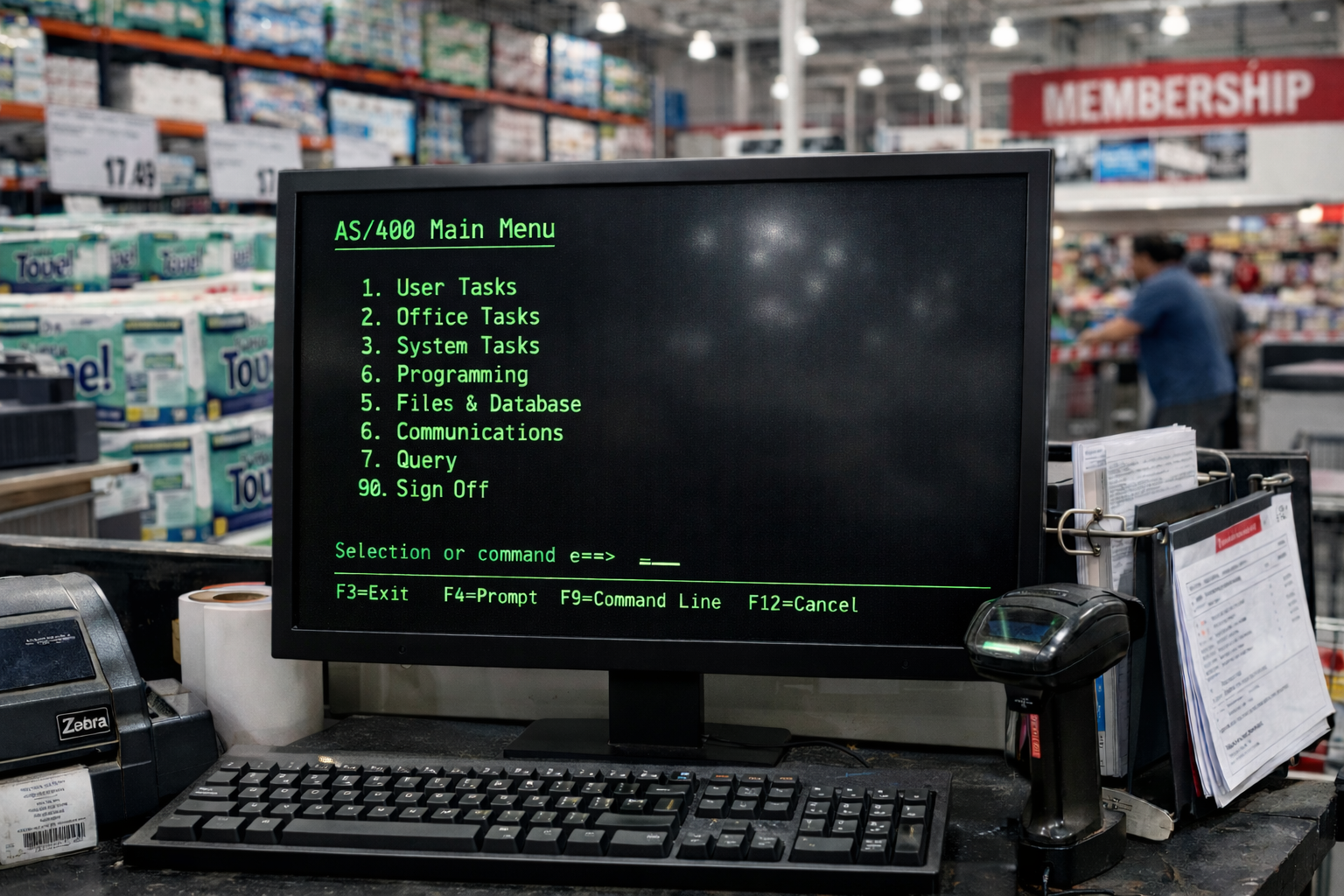
The representative turns to their computer… and pulls up a command terminal—black screen, green text! She quickly keys in the item number, and before I can even process what I’m seeing, she says, “Sorry, it doesn’t look like we’ll be getting more of that item. It also looks like the Helena and Billings stores are out, but there are still 30 in stock in Missoula.”
Not the answer I was hoping for, but the transaction was quick and clean. Disappointed that my only option was a three-hour drive, I thanked her and was on my way.
But the terminal stuck with me.
Why does one of the biggest retailers on the planet still run something that looks like it belongs in the 80s?
The question behind the question
My first reaction was, “Wow—they’re behind.” But my curiosity kept growing. What system are they using, and how can it possibly be the best fit for them?
It turns out Costco isn’t alone. A lot of large, mission-critical industries still run significant parts of their operations on systems that most people would call “legacy.” For Costco, that has historically included IBM midrange systems (often referred to as AS/400) supporting things like inventory and sales.
And if that makes you uncomfortable, you might want to avoid learning what airlines and parts of the electrical grid still depend on.
The more interesting question is: why does Costco continue to use these systems?
My conclusion: Costco isn’t behind. They’re disciplined.
Costco’s mission is simple but demanding: “to continually provide our members with quality goods and services at the lowest possible prices.” They also talk openly about rewarding shareholders.
Those goals can sound like they’re in tension. But Costco has spent decades proving you can do both—if you’re ruthless about making decisions that support the outcomes you actually care about.
If your outcomes are:
- keep operating costs low
- serve members quickly
- stay reliable at massive scale
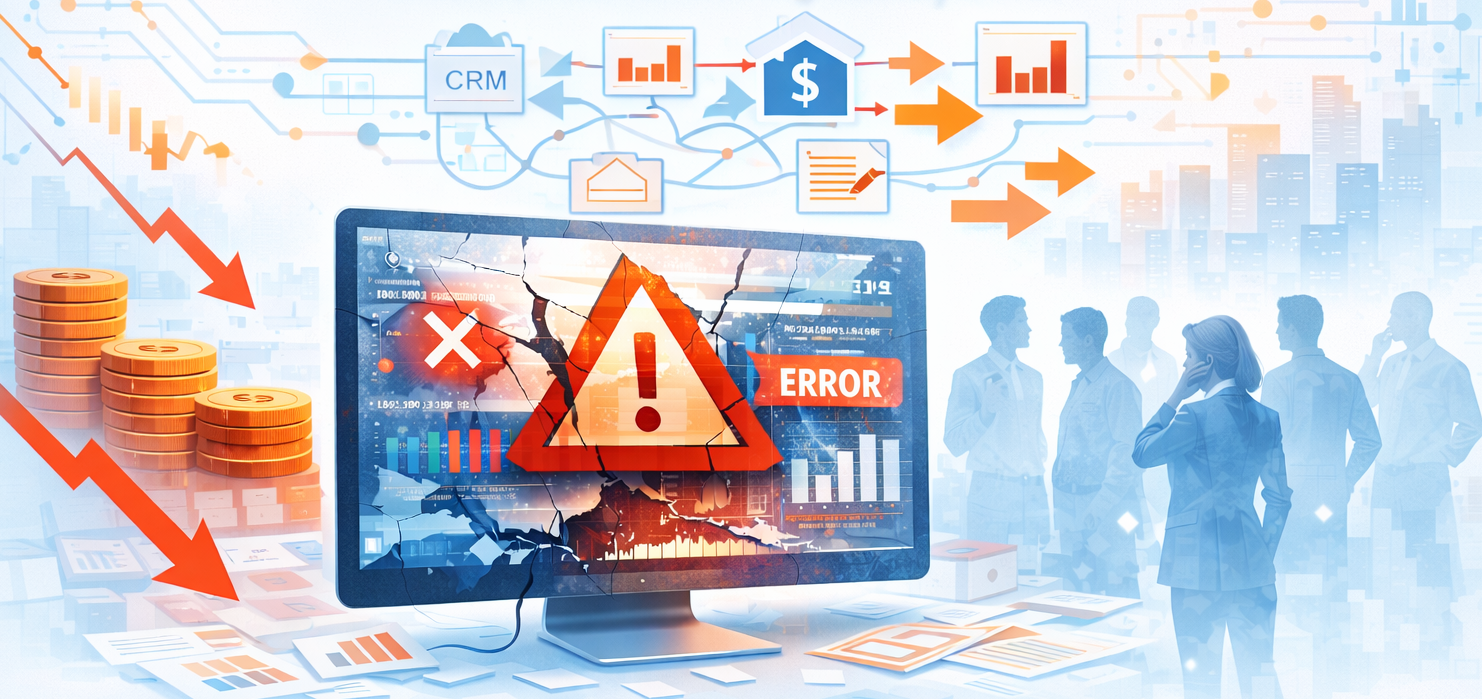
…then a “modern” system isn’t automatically better. Sometimes it’s just more expensive. And sometimes it introduces failure risk you didn’t have before.
Those terminals might look outdated, but they tend to be fast, stable, and boring in the best way. High uptime. Low overhead. Secure.
The modernization trap
I’ve watched a lot of teams fall into the same pattern:
They confuse modernization with progress.
A new interface, a new platform, a new vendor—those things can be real upgrades. They can also be expensive distractions that feel good on a roadmap but don’t change outcomes.
The trap is thinking: “We should upgrade because it’s old.”
When the better question is: “What outcome are we buying?”
And then: “Is this the cheapest, safest way to get it?”
A fair nuance: old terminals, modern backbone
To be clear, the story isn’t “Costco runs the entire business on a computer from 1989.”
The front end might look old-school, but the back end that enables scale—data centers, networking, modern infrastructure—matters a lot.
The lesson isn’t “old is good.” The lesson is: there’s no prize for upgrading unless it supports the outcomes that align with your True North.
The takeaway I keep coming back to
Costco is a good reminder that “new” (or “modernization”) isn’t a strategy.
Outcomes are.
If you’re wrestling with a tech decision right now—platform swap, re-architecture, ERP replacement, retooling the stack—the best move usually isn’t to ask, “What’s the newest option?”
It’s to get clear on:
- what outcomes actually matter
- what tradeoffs you’re willing to accept
- what success looks like in measurable terms
Once that’s clear, the right decision gets a lot easier. Sometimes it’s upgrade. Sometimes it’s stabilize. Sometimes it’s “leave it alone and invest elsewhere.”
If you want a simple way to pressure-test those decisions, our “True North” assessment approach can help you: clarify outcomes, define constraints, and map the decision back to what you’re optimizing for.