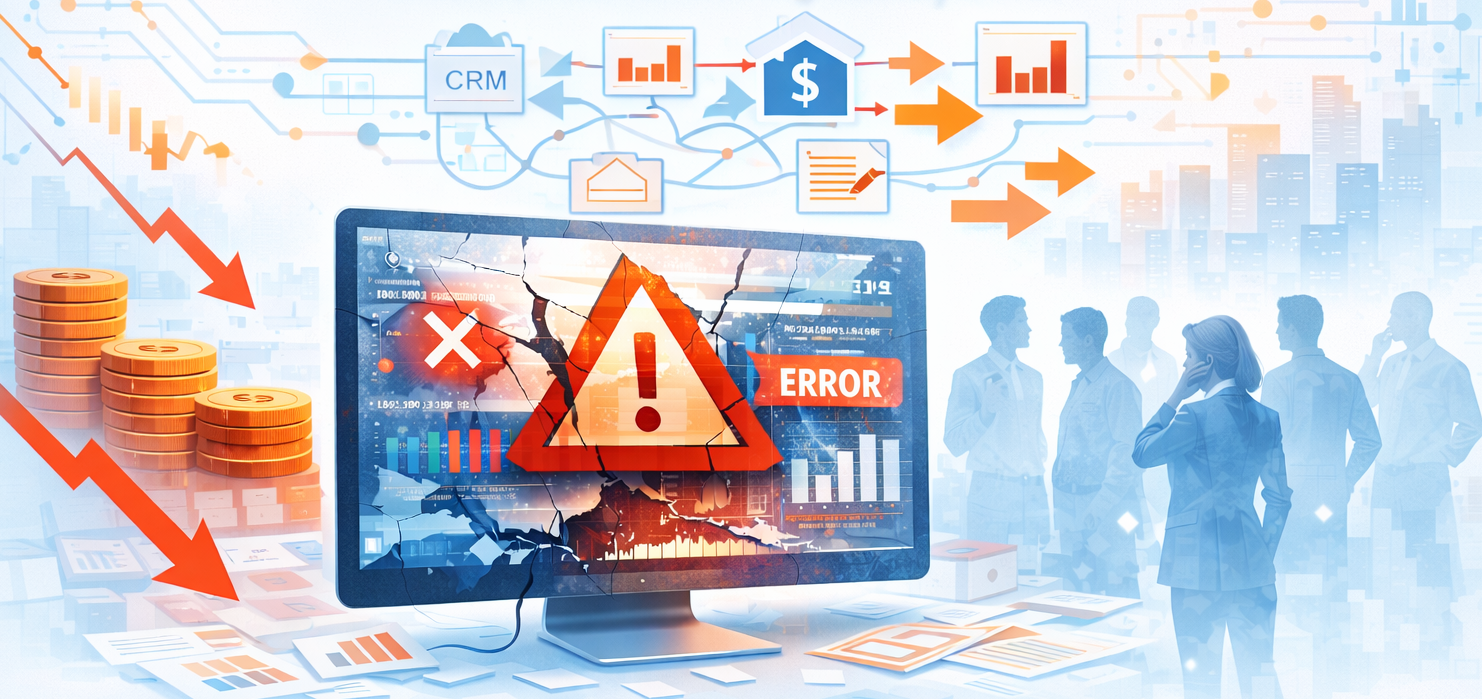
The core mistake I see in regulated AI rollouts is simple. Teams treat agents like a UX upgrade. In reality, they are a new kind of operator. They touch data, trigger systems, and leave a trail that someone will eventually ask you to defend.
In 2026, “we piloted an agent” will not mean much. The question will be: can you prove what it did, why it did it, and what data it relied on, without hand-waving. That is the difference between innovation theatre and something you can run at scale in healthcare, finance, energy, or government.
Here are the six places agents tend to break once real workflows and real oversight show up.
1) The Data Foundation Gap
What teams do: Deploy agents on top of fragmented, unverified data and assume the agent will “figure it out.”
What happens: The agent makes decisions on incomplete truth, and you do not find out until it matters.
In regulated environments, context is not a nice-to-have. It is part of the requirement. An agent is only as reliable as the data foundation underneath it, and “data access” is not the same thing as “data you can trust.”
When your systems disagree, the agent will still pick a path. It will reconcile conflicts implicitly, fill gaps with assumptions, or pull from whatever source is easiest to reach. That can look fine in a pilot. It becomes dangerous in production, when the workflow is real, the constraint is legal, and the outcome has consequences.
What holds up: A unified, verified version of record with time stamps, lineage, and clear precedence when systems conflict. If you cannot prove where the decision inputs came from and what was current at the moment of action, you cannot defend the decision later.
2) Data provenance is not optional
What teams do: Point an agent at “the data” and assume access equals understanding.
What happens: The agent makes a decision on incomplete truth, and you do not find out until it matters.
In regulated environments, the origin and freshness of data is part of the decision. Lineage is not a nice-to-have. It is the case you will have to make to an auditor, a regulator, a board, or a plaintiff’s attorney.
Example: A healthcare agent approves a treatment because a portal says a patient is “Active.” Meanwhile, coverage is flagged for prior auth in a separate claims system, and the clinical guideline it used was updated yesterday. The agent did not fail in the pilot. It failed in production reality.
What holds up: A versioned, time-stamped “version of record” with lineage you can prove. If you cannot trace the inputs, you cannot defend the outputs.
3) Governance is an engineering requirement
What teams do: Optimize for autonomy because it demos well.
What happens: You inherit black-box liability.
In 2026, “the AI made the call” is not a defense. It is a confession that you do not control your own process.
-
.Finance: Loan denial without the specific, reproducible basis required under fair lending rules.
-
Healthcare: Triage or coverage decisions you cannot explain to a patient, a regulator, or a review board.
What holds up: Deterministic guardrails, immutable audit logs, and clear human sign-off points for high-stakes actions. Human-in-the-loop is not a slogan. It is how you keep decision rights where the law expects them to be.
4) If it is slower, it will be bypassed
What teams do: Assume chat is always the right interface.
What happens: People route around it, and you get shadow AI.
The 15-second rule will hold true. Employees and customers reject any tool that increases the “time-to-done.” If an agent requires more effort than the manual process it replaces, it will be ignored. Regulated work already has friction: permissions, attestations, secure systems. If the agent adds steps, more prompting, more verification, more “are you sure?”, users will revert to what they trust or what is fastest.
What holds up: Measure time-to-compliance, not time-to-chat. If a structured workflow or a secure button beats an agent for a standard task, build the button.
5) Know when not to automate
What teams do: Use reasoning agents on linear, rule-bound processes.
What happens: You pay for creativity where you need certainty.
Some workflows are not agent problems. They are rules and routing problems. KYC document checks are the classic example: the procedure is defined, the tolerance for variance is zero, and the audit requirement is absolute.
What holds up: Use agents where judgment is required within boundaries, like diagnosing multi-variable operational issues. Use scripts, rules engines, and deterministic pipelines for linear compliance tasks. It is cheaper, faster, and defensible.
6) Agents overwhelm your systems
What teams do: Scale an agent on top of legacy cores without hardening.
What happens: You accidentally cause a denial-of-service condition in your own environment.
Most backend systems were built for the pace of human interaction—typing, clicking, and waiting. Agents operate at a different scale, requesting data hundreds of times faster than a person can. Agents do not click. They hammer. A helpful agent can generate 100x the calls, and suddenly your stability becomes your biggest risk.
What holds up: Adversarial stress testing and rate-limited architectures before you scale. Treat agents like load generators, because that is what they are.
7) Reasoning has a unit cost now
What teams do: Use the most expensive model for routine retrieval, defaulting to autonomous agents for every task without a cost-benefit analysis.
What happens: Using a high-powered autonomous agent for a simple data lookup is like hiring a partner at a law firm to answer your phones. It works, but it comes at a significant cost.
We moved from fixed software costs to variable reasoning costs. Paying a top-tier model to look up a policy number is like having a senior partner file forms.
What holds up: Route work by complexity:
-
Retrieval and lookups: structured queries, cached results, smart buttons, scripts
-
Interpretation and tradeoffs: governed agents with audit trails
-
High-risk decisions: agent supports, human decides
If you do not design the routing, your AI transformation becomes a cost center with better PR.
What to do with this
Regulated leaders will not win by running the flashiest pilots. 2026 is about integrating AI without breaking your budget, compliance, or infrastructure. The next era of growth won’t be won by the company with the most AI licenses, but by the one with the most stable, governed, and scalable platforms that are stable, governed, and defensible.
The practical sequence looks like this:
-
Unify and version the data you are willing to act on
-
Define decision boundaries and audit requirements upfront
-
Start with deterministic workflows, then add agent capability where judgment is real
Build the foundation first. Otherwise the agent is just a faster way to make mistakes.
You can’t patch your way out of these AI breaking points. We can help you determine not just how to build the agent, but if you should build it at all. Work with us to turn these strategic decisions into the architecture that stays stable as you scale.

.png?width=2240&height=1260&name=7%20Reasons%20your%20AI%20strategy%20will%20break%20in%20(2).png)